Family Size, My Foot: The Tiny Shelf Tag That Exposes Every Grocery Store's Favorite Trick
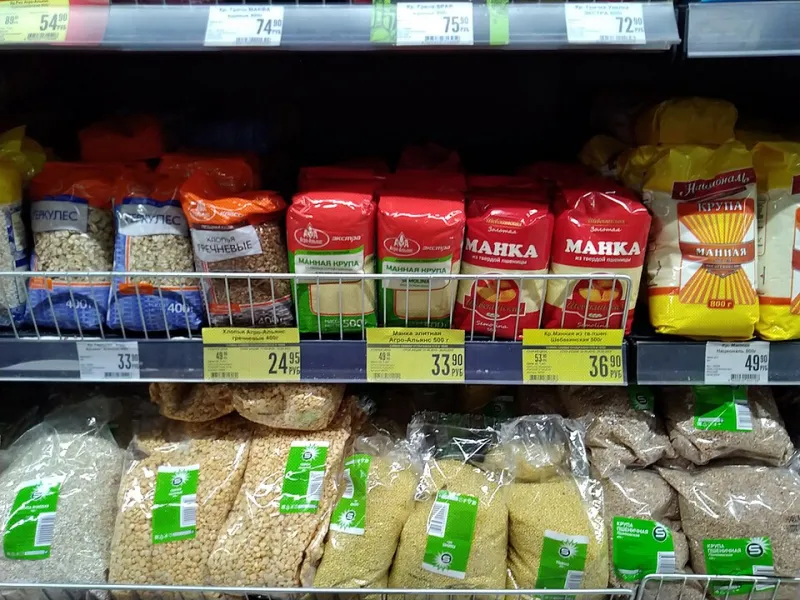
Photo: Alexander Davronov, CC BY-SA 4.0, via Wikimedia Commons
The Tag Nobody Reads
Every grocery shelf in America has two kinds of price tags. The big one tells you what you'll pay at the register. The small one — usually tucked in a corner, printed in type so modest you'd think the store was embarrassed by it — tells you what you're actually paying per ounce, per pound, or per sheet.
That second tag is the unit price, and once you start reading it, you can't stop. It's the only number on the shelf that isn't trying to sell you something.
I learned this the hard way, standing in the paper towel aisle of my local Kroger comparing a jumbo pack against a regular one, convinced the jumbo was obviously the better deal. It wasn't. Per sheet, the smaller pack was cheaper by nearly 20%. The jumbo was just... bigger. And I'd been paying extra for bigger my entire adult life.
Why the Sticker Price Lies
Here's the uncomfortable truth about modern grocery retail: the sticker price is a marketing decision, not a math one. Retailers know most shoppers grab the package with the lowest number on it and move on with their day. So they engineer packages — and prices — to win that three-second glance.
The unit price cuts through all of it. It doesn't care whether the bottle got taller or the box got sneakier. It just tells you what one ounce costs, and that's the only fair way to compare two things that aren't the same size.
The Shrinkflation Problem
You've probably noticed your favorite snacks feeling a little lighter lately. That's shrinkflation — manufacturers quietly reducing package contents while keeping the price the same, or even raising it.
The classic tells are all around you:
- The redesigned bottle. New "ergonomic" shape? Often means less product in the middle.
- The taller, narrower can. Looks like more. Usually isn't.
- The "improved" carton. When packaging gets a makeover, check the net weight on the back before you celebrate.
Here's the thing though: shrinkflation is nearly invisible on the sticker price. A jar of peanut butter dropping from 18 ounces to 16.3 ounces at the same $4.49 looks identical week to week. But the unit price tag catches it every time. When that jar's per-ounce cost quietly climbs for three months straight, you'll see it in small print before you feel it in your wallet.
The Simple Formula (When There's No Tag)
Some stores — and most online retailers — make you do this math yourself. It takes ten seconds:
Price ÷ total ounces (or count, or sheets) = cost per unit
Example: a 24-ounce jar of pasta sauce at $5.28 works out to 22 cents an ounce. The 14-ounce jar at $2.79 is 19.9 cents an ounce. The smaller jar wins, which is exactly the kind of result that would never survive a glance at the sticker prices alone.
A few shortcuts worth memorizing:
- Move the decimal: 16 ounces at $3.20 is 20 cents an ounce. Easy.
- For paper goods, compare per sheet, not per roll. Roll sizes vary wildly between brands — some "mega" rolls are barely two regular rolls.
- For trash bags and zip-top bags, divide by the count. "Value pack" claims fall apart fast under this test.
Five Categories Where Buying Big Backfires
The warehouse-club instinct runs deep in American shopping, but it doesn't always pay. These are the categories where I've consistently found the small package — or the mid-size one — beating the giant:
1. Laundry detergent and cleaning concentrates. Formulas change. When a manufacturer reformulates, the giant jug you bought on sale is suddenly last-generation chemistry at a premium per-ounce price. Smaller packages let you adapt.
2. Cooking oils and nuts. Both go rancid. The gallon jug of olive oil is a fantastic deal right up until half of it turns bitter in your pantry. Buy what you'll use in two months.
3. Cereal and snack foods. Per-ounce pricing on family-size boxes is shockingly inconsistent. I've repeatedly found the standard box cheaper per ounce during ordinary sales weeks — no coupon required.
4. Trash bags. The count-based math here is brutal. "Value" boxes frequently cost more per bag than the modest 40-count box sitting right beside them.
5. Frozen vegetables. Store-brand steamable bags in the smaller size routinely undercut the big steamable bags per ounce. The freezer section seems built to punish anyone who assumes bigger is better.
When Big Really Is Better
To be fair, the jumbo size earns its keep in a few places. Shelf-stable pantry workhorses — rice, dried beans, flour, toilet paper — almost always get cheaper per unit as the package grows, and they won't spoil before you use them. If you have the storage space and the storage discipline, stock up there.
The pattern is simple: non-perishable and certain to be used? Go big. Perishable or reformulated often? Stay small.
Make It a Thirty-Second Habit
You don't need a spreadsheet or a shopping app. Just glance at that small corner of the shelf tag before every purchase, especially when a sale sign is yelling at you. Sales are chosen by marketers. Unit prices are chosen by arithmetic.
And when you spot a shrinkflation catch — a per-ounce price creeping up on an unchanged sticker — it's genuinely satisfying. You caught the trick. The shelf tag told you, and now you know exactly which package deserves your money this week.
That's the whole system. Honest numbers, thirty seconds, and a small tag most shoppers walk right past.